The Wandering Walls Featured in Contemporary Architecture

The Wandering Walls, Placed on the Map of Contemporary Architecture
Published by Braun Publishing, Contemporary Architecture – Masterpieces Around the World spans 448 pages and presents 278 architectural works from around the world, offering a cross-section of contemporary architecture across different regions, scales and typologies.
278 works of contemporary architecture worldwide
Only 5 from Taiwan
The Wandering Walls is one of them.
THE WANDERING WALLS · HENGCHUN · TAIWAN · P.356–357
This Is Not a Book About Hotels
The book is not a collection of hotels or architectural stays. It brings together residences, cultural buildings, churches, schools, public architecture, commercial spaces and large-scale urban projects from around the world. Works of different purposes and scales are considered together within a broader portrait of contemporary architecture.
Here, The Wandering Walls is presented not simply as a place to stay, but as a complete architectural work — placed within the wider context of contemporary architecture around the world.
A place you can stay,
and an architectural work documented on the world stage.
278 Works Worldwide
5 from Taiwan
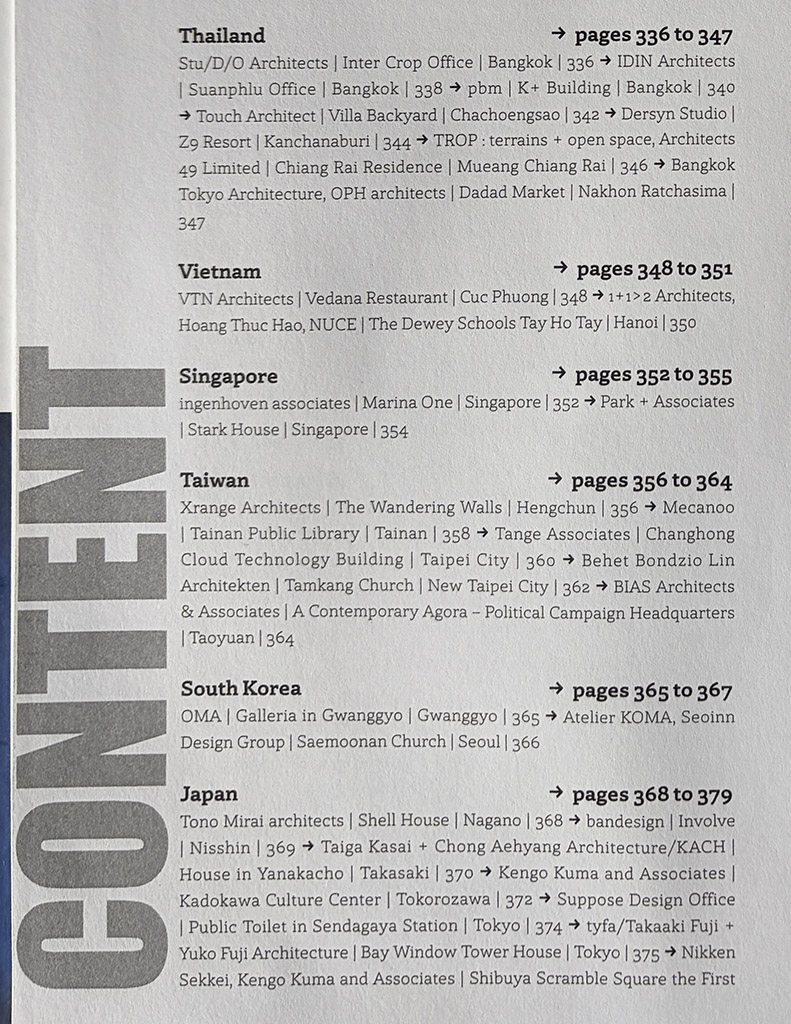
Among the 278 architectural works presented in the book, five are from Taiwan. The Wandering Walls opens the Taiwan section, appearing as The Wandering Walls · Hengchun on page 356.
More Than an Exterior
The Wandering Walls is presented across a full spread. Alongside architectural photography, the book includes floor plans and a sectional drawing, documenting the project through its spatial organisation, curved walls and relationship with the surrounding landscape.
The accompanying text begins with the project's setting on a coastal mountaintop among tall grasses and acacia forests. It describes how the curving walls define public and private spaces, and how the architecture flows between interior, exterior and its natural surroundings.
What is documented is not simply the form of a building,
but the relationship between architecture and the land.

From the Pages to the Cover
The Wandering Walls is not only featured inside the book. An image looking upward through its distinctive curving concrete walls was also selected as one of the architectural images featured on the cover.
From Taiwan's southernmost peninsula, beside an acacia forest,
to the cover of a global survey of contemporary architecture.